
A Telegram signals trading bot: what it consists of and where people go wrong
Published on:
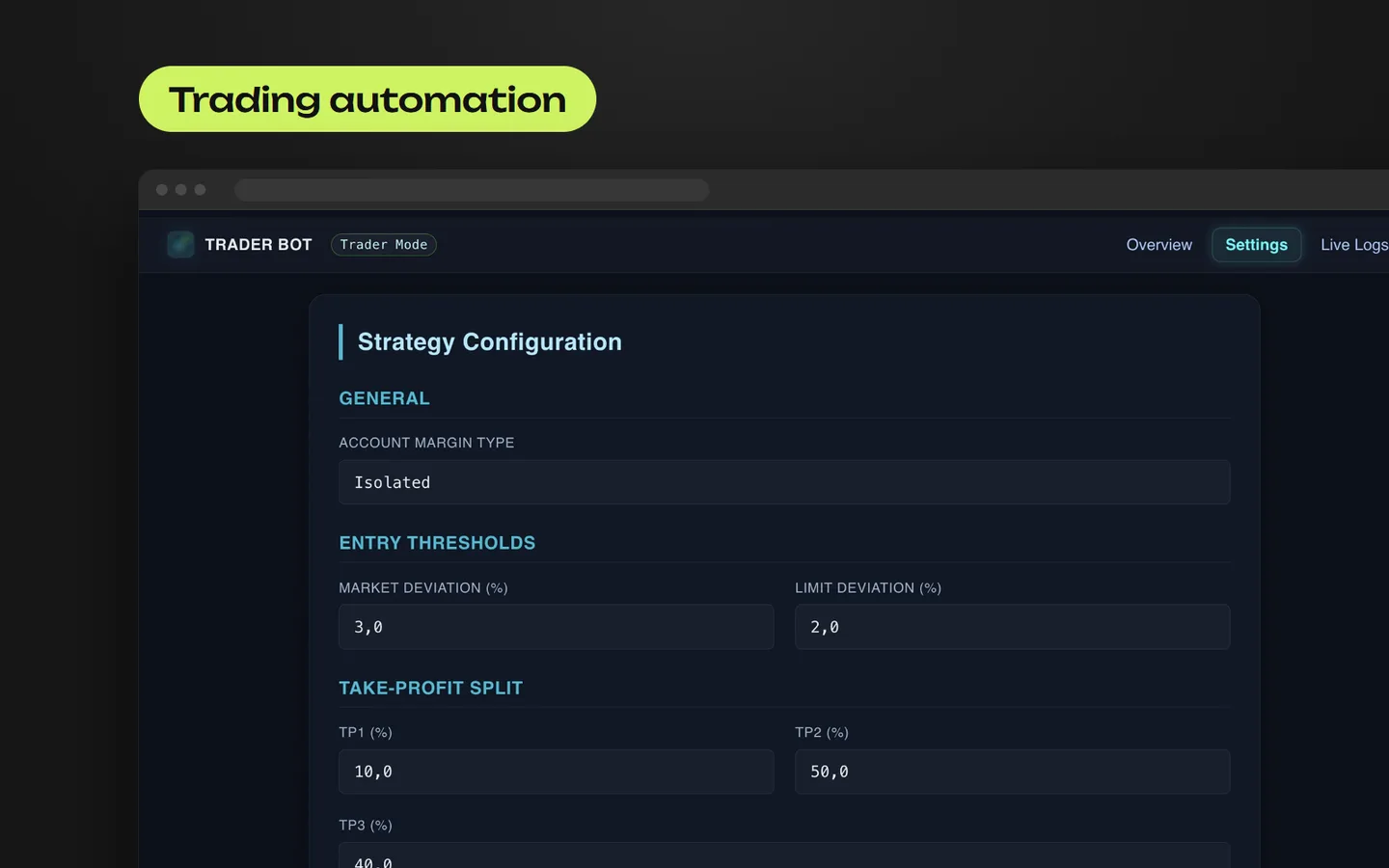
The idea is simple: a trading signal arrives in Telegram and a bot opens the trade on the exchange by itself. In practice there are many decisions between “read the message” and “opened the position”, and they separate a toy from a working system. Below is a breakdown based on my case Trade Copier: Telegram → exchange.
The problem people come with
Usually a person watches a signals channel and copies trades to the exchange by hand. It is slow, easy to get a number wrong, and impossible to do around the clock. In my case the goal was wider than forwarding messages: a system that processes the signal itself, opens the trade with real trading logic and keeps risk under control.
What such a system consists of
1. Signal parsing
Signals are written by people, so the format drifts: different words, field order, abbreviations. The bot has to extract the instrument, direction, entry, stop and targets. Anything it cannot parse with confidence is better flagged for review than executed.
2. Exchange connection
In the case, execution goes to the Blofin exchange through its REST API. Careful key handling, exchange error handling and a clear state for every order matter here.
3. Risk management and multiple TPs
A trade is more than an entry. You need position size, a stop and multi take-profit logic: part of the position is closed at each target. Without it the bot just repeats someone else’s mistakes faster.
4. Data storage and admin panel
I build the backend on Python and FastAPI, data lives in PostgreSQL, and a web admin panel handles control. You can see which signal arrived, what the bot did with it and what is happening with the position.
Where people go wrong most often
- Executing a signal immediately, without checking its format and freshness.
- Not planning for lost connections or exchange errors.
- Assuming that opening a trade is enough and forgetting to manage the position.
- Keeping no log, so nobody can tell why a trade went the way it did.
- Not limiting risk at the level of the system itself.
Questions I ask before starting
- Where do the signals come from and how consistent is their format?
- Which exchange should execute?
- Which risk rules must be built in?
- Is an admin panel needed and who will use it?
- What should happen on failure: stop, notify, retry?
The answers shape the architecture more than any library choice.
What you end up with
The result is a crypto trade automation system: the path from a Telegram signal to exchange execution and ongoing position management runs without manual work. One caveat: the bot executes rules, it does not guarantee profit. Signal quality and strategy stay with the owner.
What next
If you need a similar bot, see how I approach these projects on the trading bot development page. Tell me in the Telegram bot where your signals come from and which exchange you trade on, and I will reply with how it can be built: message Ilya in the bot.
The project behind this article
More Articles
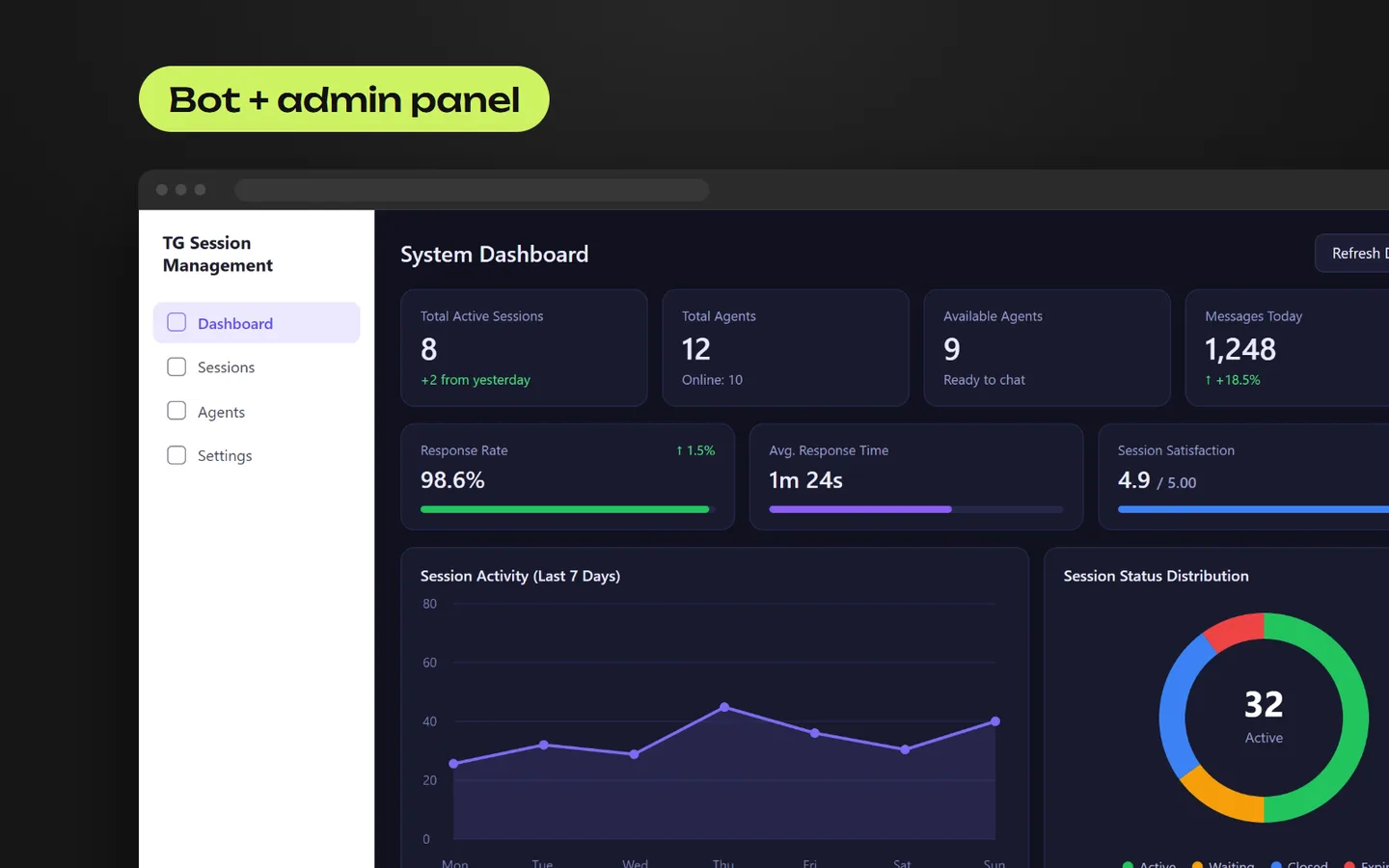
Telegram Bot for Private Client Chats: Talk to Customers Without Sharing Personal Contacts
A breakdown of my case: the bot opens a private client-agent session, relays messages and closes it after 24 hours. What to consider if you need the same.
Read more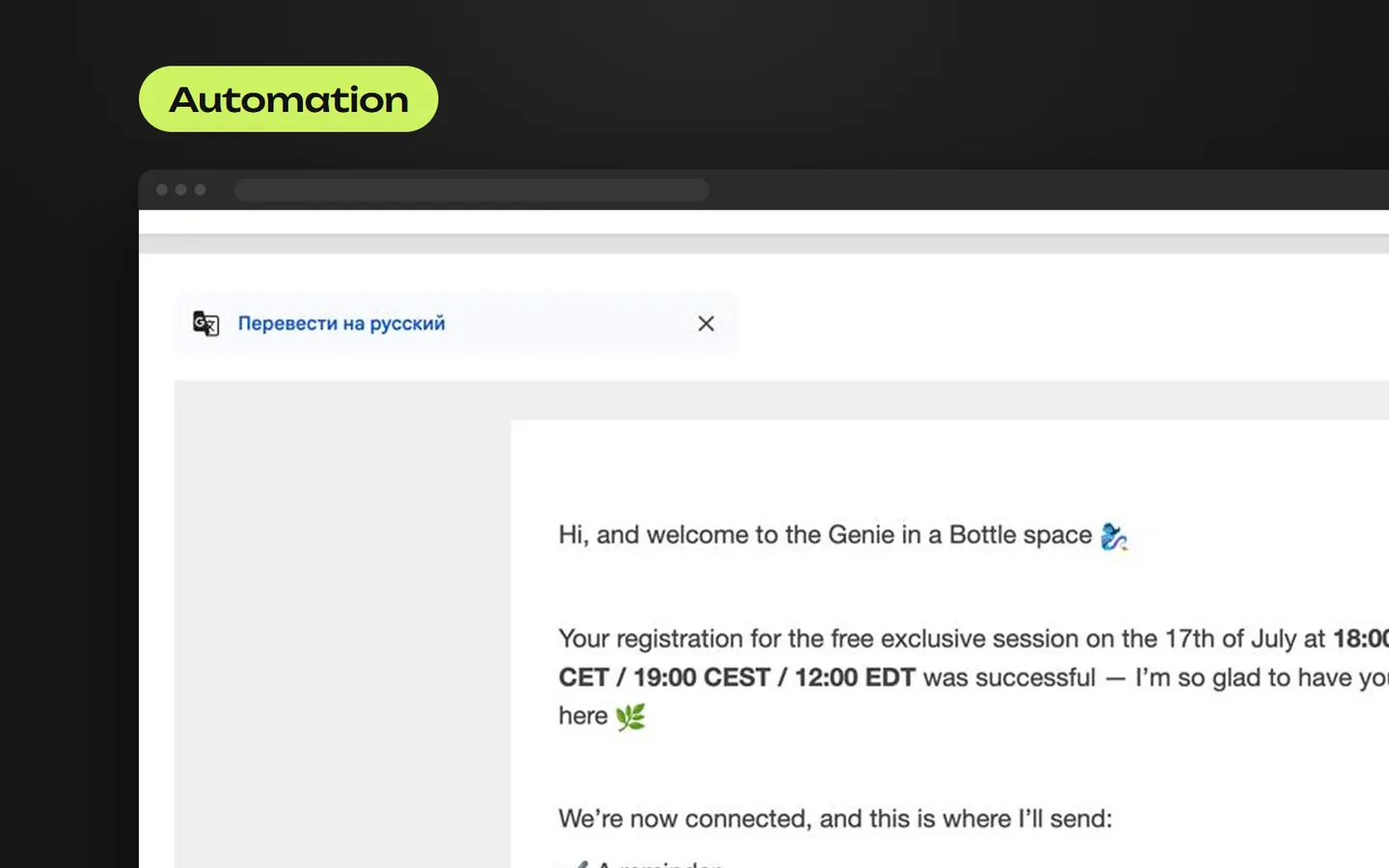
How to Move Emails from Telegram to SendPulse Automatically: a Case Breakdown
A breakdown of my case: a Python system collects emails from Telegram and syncs them to SendPulse by itself. What it solved, how it is built and what to clarify first.
Read more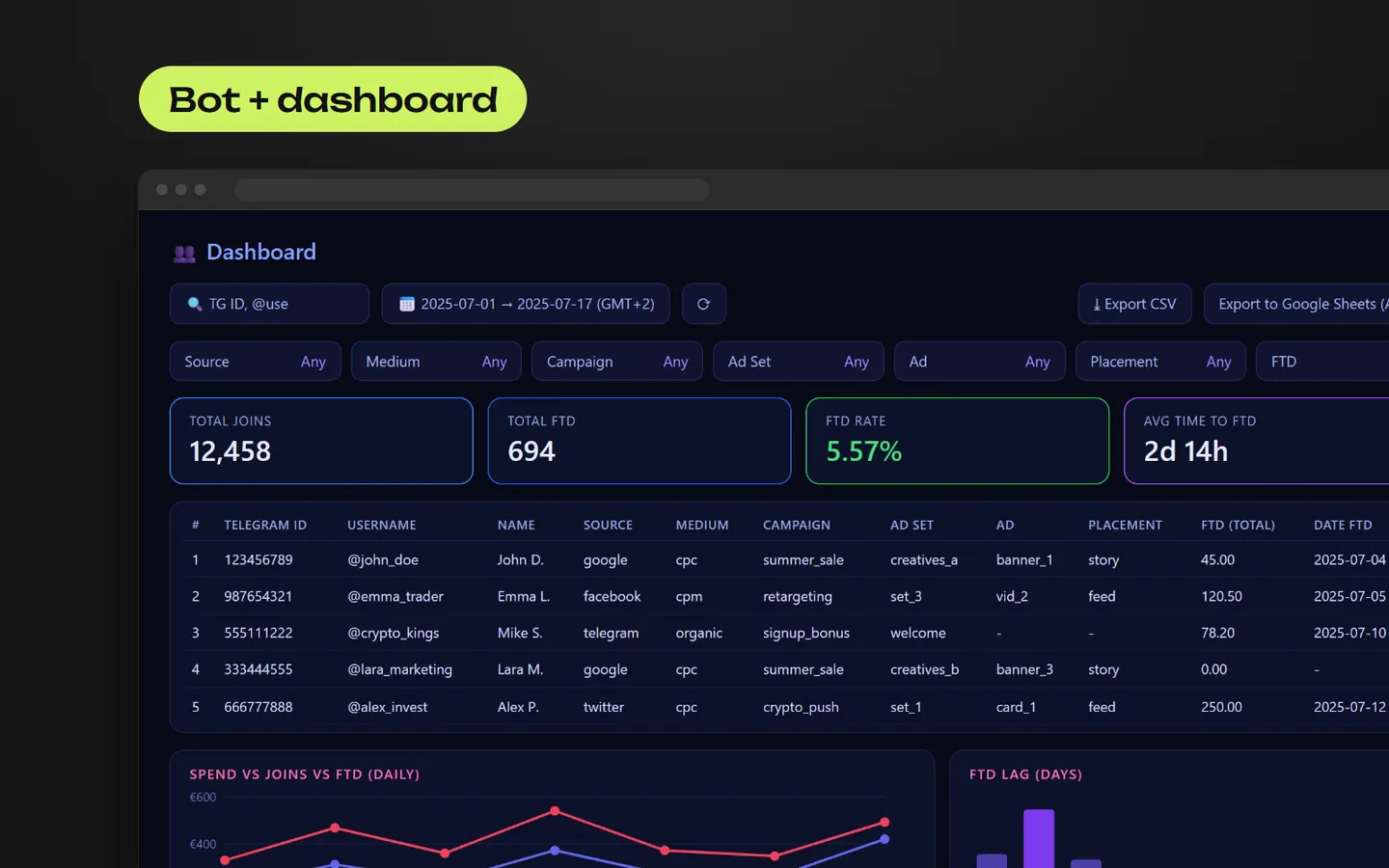
UTM Tracking in a Telegram Bot: How to See Where Clients Come From
Deep links, a database and an admin panel: how to learn which ad or post brought a client to your Telegram bot. A breakdown of my case and common mistakes.
Read more