
UTM Tracking in a Telegram Bot: How to See Where Clients Come From
Published on:
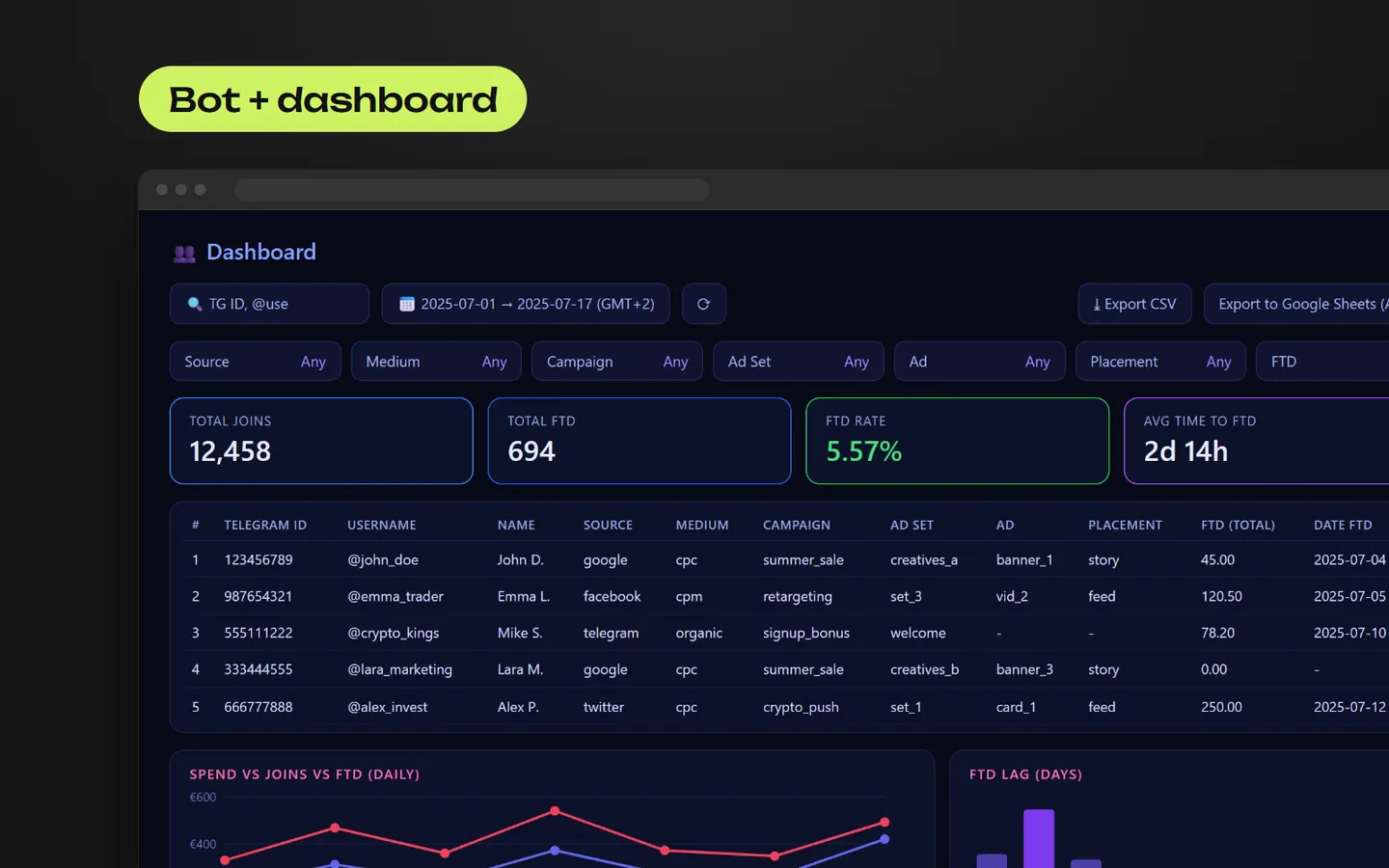
Telegram does not pass ordinary UTM tags to a bot: a person taps a link, opens the bot, and without extra work you do not know where they came from. For a small business that means money goes into ads, posts and partners, and it is unclear which channel brings clients. Below I explain how this is solved, using my own case.
Why you cannot just add UTM tags in Telegram
On a website the tag lives in the page address and analytics reads it on its own. A bot has a single address, the link to the bot. Whatever you want to pass along, Telegram hands to the bot in one form only: the parameter of the /start command. That is a deep link.
So the scheme is:
- for each source (ad, post, partner, QR code) you make a separate link with a unique parameter;
- on start the bot reads the parameter and stores it with the user;
- every later action of that person is tied to the source.
What I built in the case
In the UTM tracking case the goal was bigger than collecting leads. The system had to show where a user came from, how they moved through the funnel and which campaigns actually drive results.
The solution had four parts:
- a Telegram bot with deep-link UTM tracking;
- PostgreSQL data storage;
- a FastAPI admin dashboard;
- filters, analytics and export.
As a result, campaigns became more transparent, the user flow is tracked automatically, and the team buying traffic got a working tool for analytics and scaling.
Common mistakes
Tags only in someone’s head
If campaign names live in a chat or a spreadsheet nobody updates, in a month no one remembers what a parameter means. The source must be stored in the database with a readable name.
Counting only starts
Someone pressed /start and did nothing. What matters is whether they reached a request, a payment or another target step. So the database should keep not only the source but also the events after it.
No admin panel
Nobody looks at data in a database without a convenient screen. You need filters by source and period, and export, so you can hand the data to an accountant or a partner.
Everything done by hand
If statuses and conversions are entered manually, the data goes stale. In the case, data synchronization is automatic.
Checklist before launch
- Decide which sources you need to tell apart: ads, posts, partners, offline.
- Decide which action in the bot counts as success.
- Storage: where users, sources and events live.
- A screen where the owner sees the result without a developer.
- Data export.
Who needs this
Any business that brings people to Telegram from several places: a shop, a studio, a service with partners. If you invest in traffic, you should know what works.
What next
More about how I build bots is on the Telegram bot development page. To see how this would work for you, message my bot: https://t.me/chornuy7_tech_bot?start=src_blog. Tell me where your clients come from now, and I will say what is worth tracking.
The project behind this article
More Articles
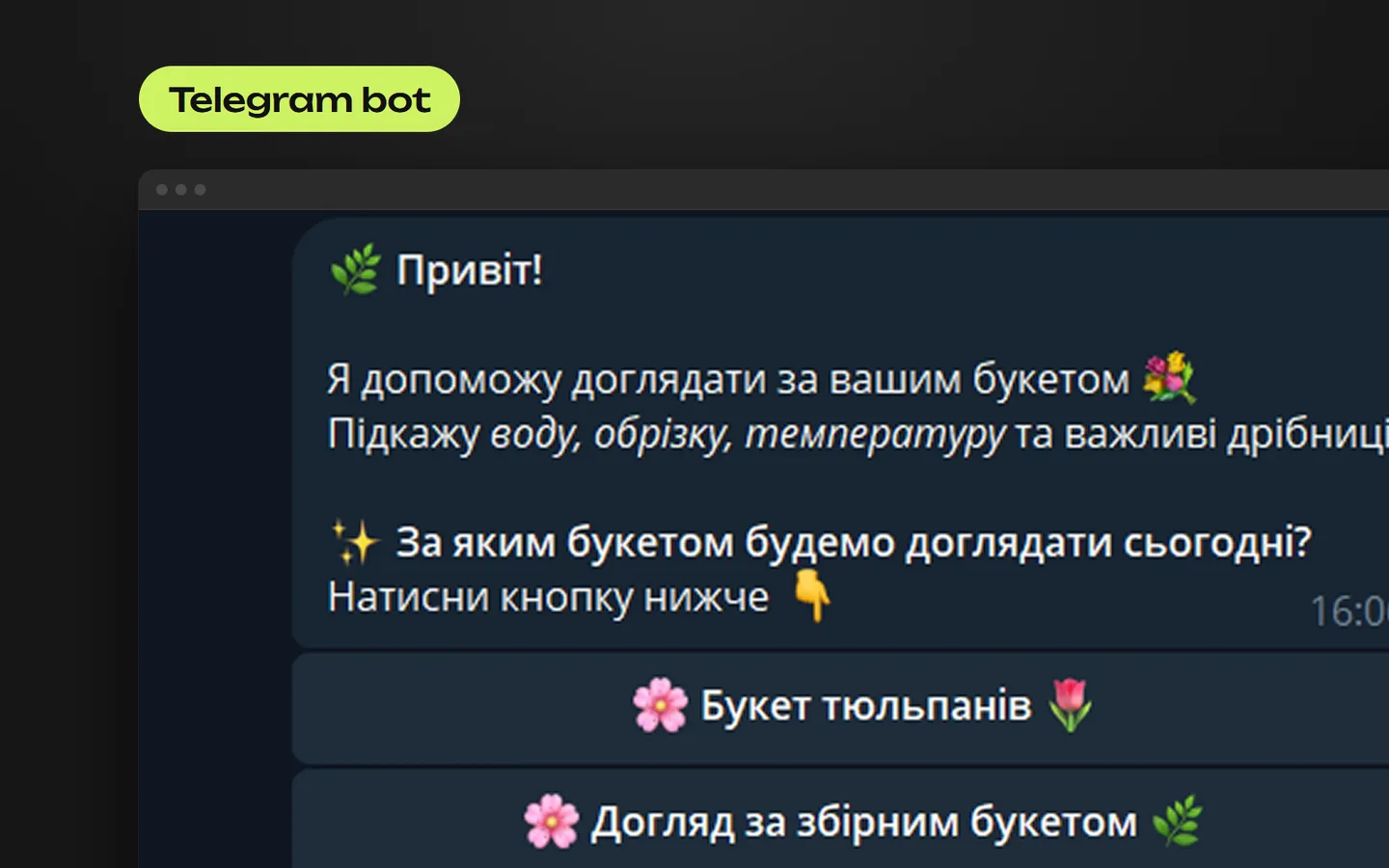
Telegram bot for a flower shop: what it does after the bouquet is sold
A bot for a flower shop that answers bouquet care questions after the purchase. I break down the flow and the decisions from my case.
Read more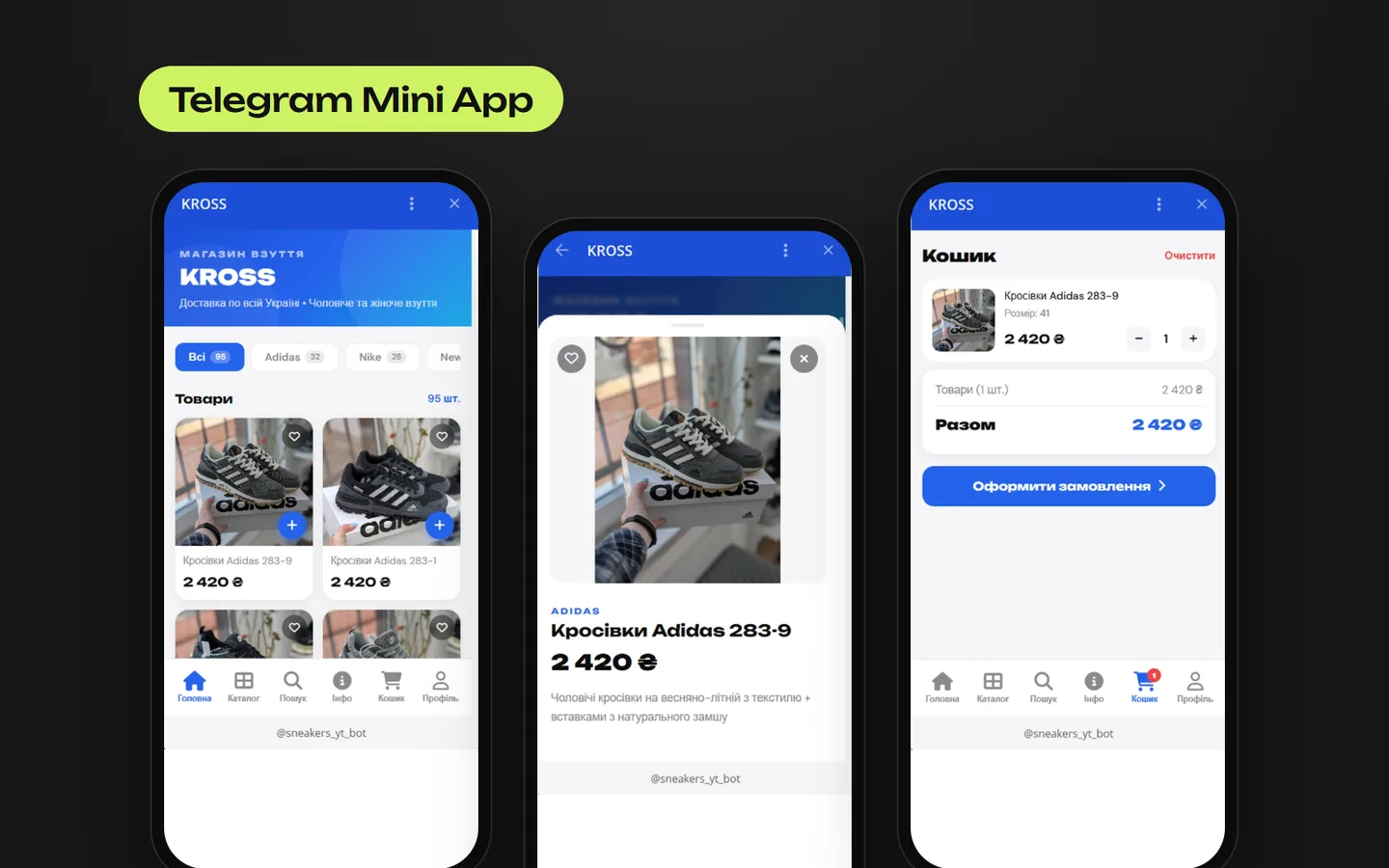
Telegram Mini App for a Shoe Store: A Checklist From My Case
A checklist from my sneaker store Mini App case: what a shoe shop needs inside Telegram so buyers reach checkout without extra redirects.
Read more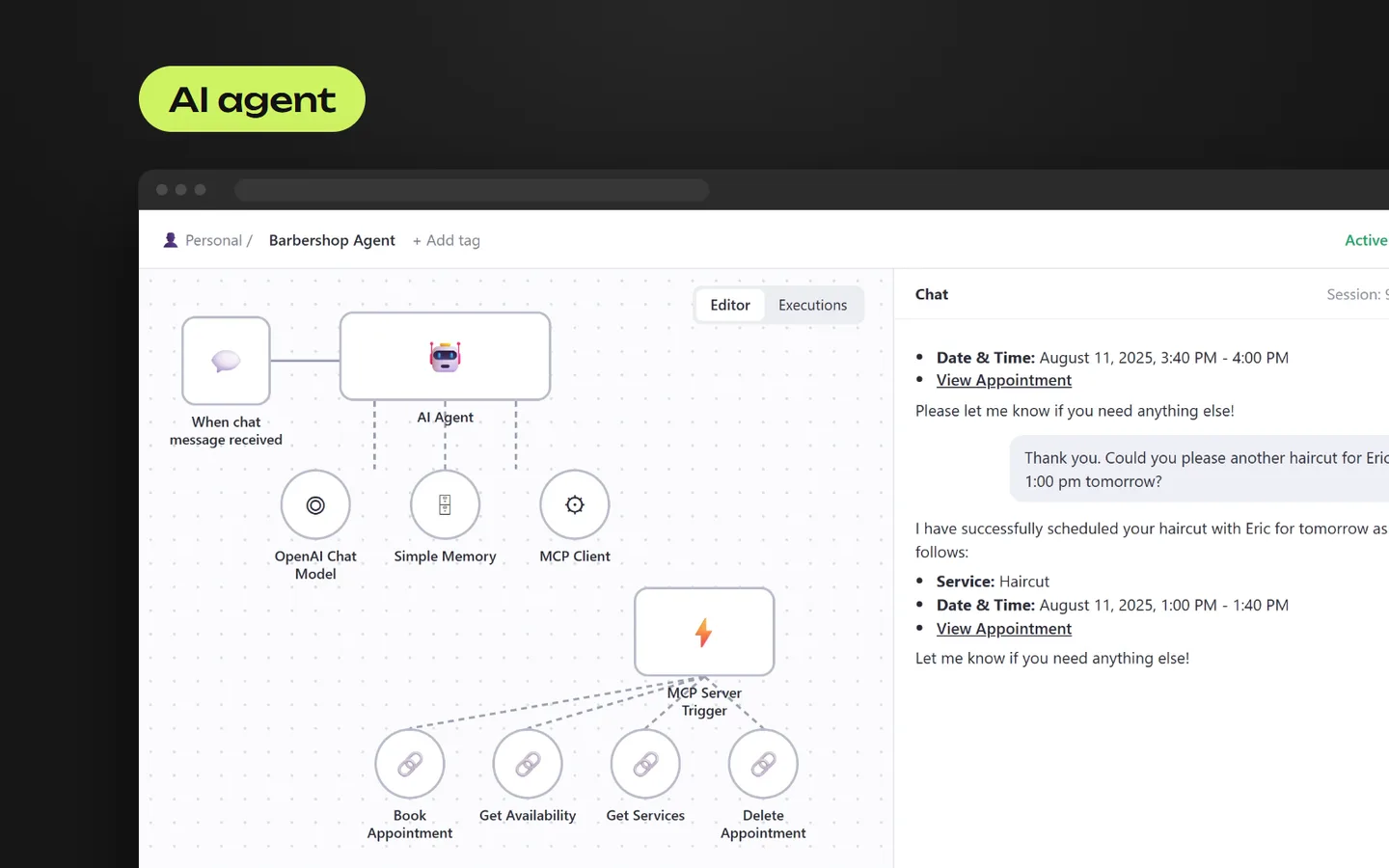
AI Booking Agent for a Barbershop: 6 Questions Owners Ask Me
A voice AI agent that books barbershop clients on its own and manages the calendar. I answer the questions salon owners ask most often.
Read more