
Ecommerce Website Development
An online store where customers find the product fast, pay by card and pick a delivery option, while you see every order in one CRM. The platform is chosen around your catalog, market and budget.
Platform first, design second
A store starts with business questions, not colours: how many products you sell, where your buyers live, how they pay and how the order reaches them. The answers decide whether the store runs on a ready-made platform such as Shopify or WooCommerce, on custom code with your own logic, or inside Telegram when your customers already chat with you there.
A ready-made platform launches faster and is easier to maintain, but it comes with a monthly bill, and unusual flows run into its limits. A custom-coded store costs more upfront and lets you build any catalog, customer account, discount logic or warehouse sync. I compare both paths on your actual task and tell you plainly where the extra spend is not worth it.
I take the project from catalog structure to the first paid order: payments through Stripe, Shopify Payments or PayPal, shipping rules, a CRM, order alerts in Telegram and SEO for product and category pages. In scope it matches the E-Commerce package of CHORNUY7 Studio: a store with a CRM, customer accounts, up to 250 products, payments, delivery and PDF invoices. I am personally responsible for the project.
What is included
- Platform choice for your catalog, market and budget, with the reasoning explained
- Catalog structure: categories, filters, product variants such as size, colour or volume
- Design and responsive layout built for phones first
- Cart and checkout without unnecessary fields
- Online payments and shipping options for the countries you sell to
- A CRM for orders, Telegram alerts for new orders, PDF invoices
- Customer accounts with order history
- SEO for products and categories: meta tags, clean URLs, sitemap, page speed
- Admin panel as a gift: products, prices, orders and leads, no developer needed
Who it is for
- You sell through Instagram, marketplaces or direct messages and want your own store where orders are placed without back-and-forth chats
- Your current store is slow, awkward on a phone or hard to update, and rebuilding is faster than patching
- You need online card payments and every order in one CRM instead of spreadsheets and inboxes
- Buyers search for your products on Google, so every product needs its own page with photos, copy and SEO
- You want customer accounts with order history, delivery status and repeat purchases in a couple of taps
- You are entering a new market and need another currency, language and local payment methods
When something else fits better
- You sell one product or one service from ads. A landing page with an order form is enough, a full store would be overkill. See the service: Landing pages
- Your buyers already message you on Telegram and order from their phones. A store inside the messenger is faster to launch. See the service: Telegram store
- You sell appointments, not products. You need a booking system with a calendar, not a catalog. See the service: Booking bot
What it solves
- Shopify store
- Shopify dropshipping store
- Store inside Telegram: bot and Mini App
- Custom-coded store with accounts and your own logic
- Moving a store to another platform
- Payments, shipping or a CRM for a store that is already live
Related case studies
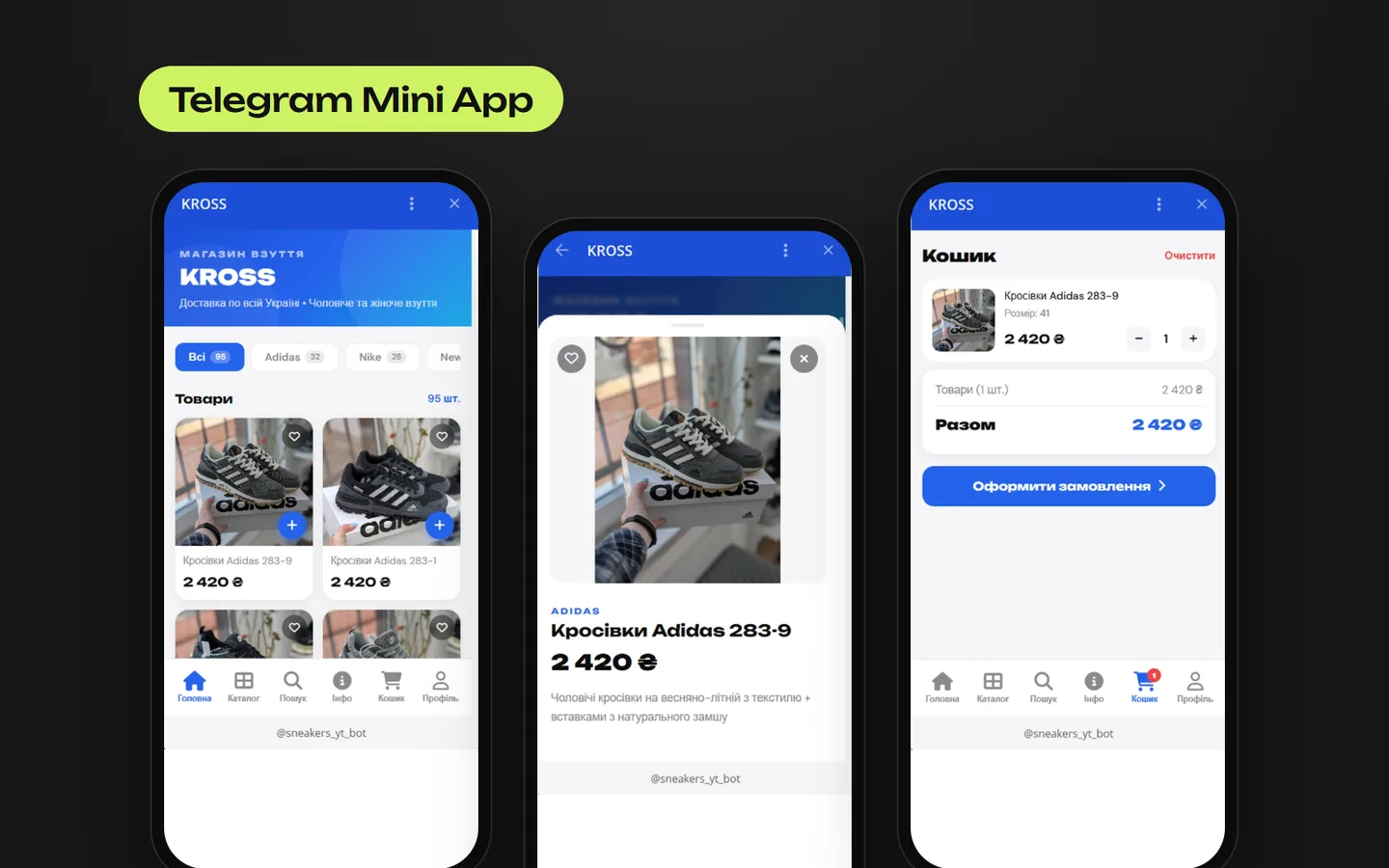
Telegram Mini App for a Sneakers Store
A Telegram Mini App for an online shoe store with a product catalog, size selection, built-in payments, and in-chat checkout directly inside Telegram.
Read more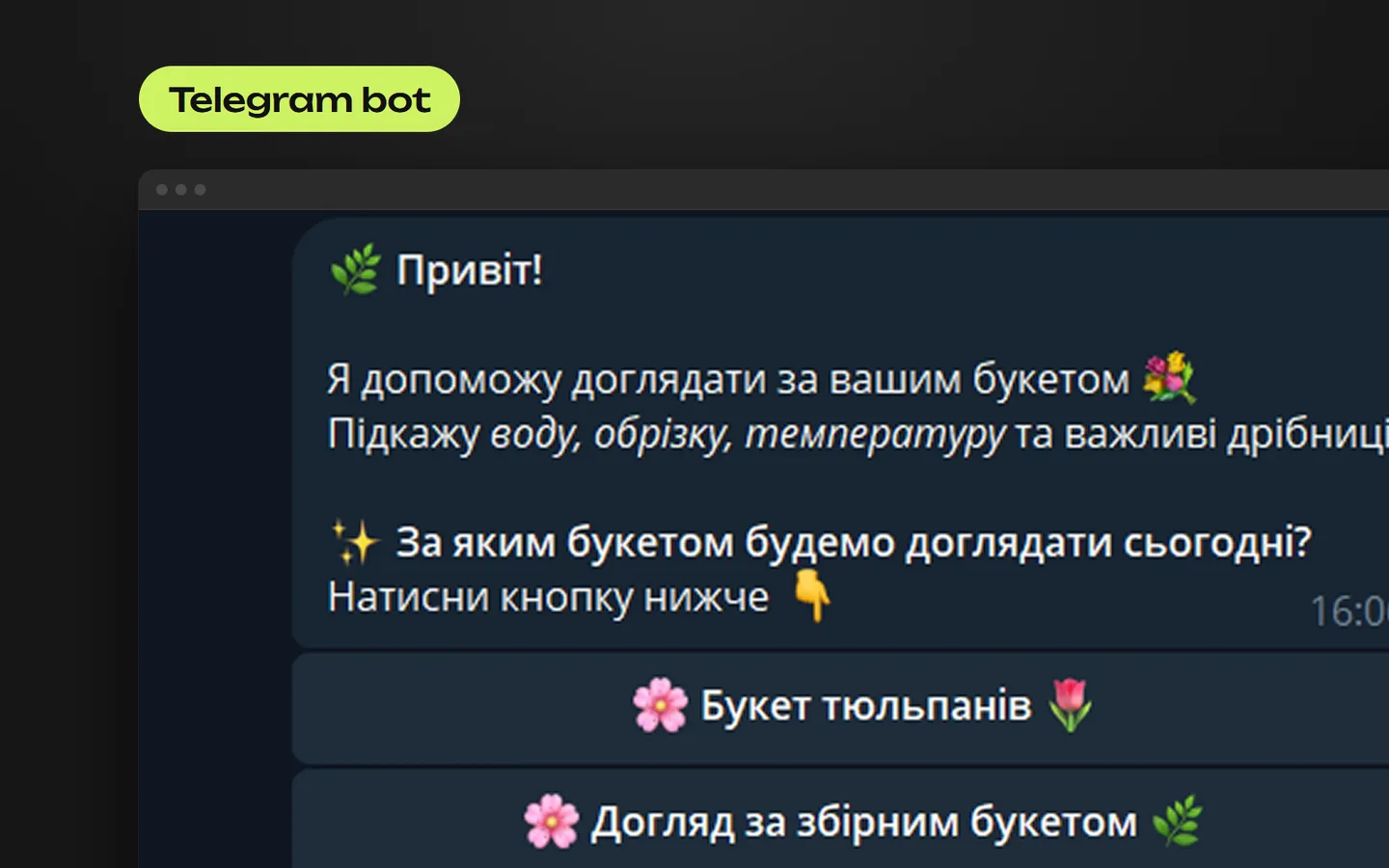
Flower Care Telegram Bot for a Flower Shop
A Telegram bot for a flower shop that helps customers care for their bouquets after purchase and provides tailored recommendations for different flower types.
Read more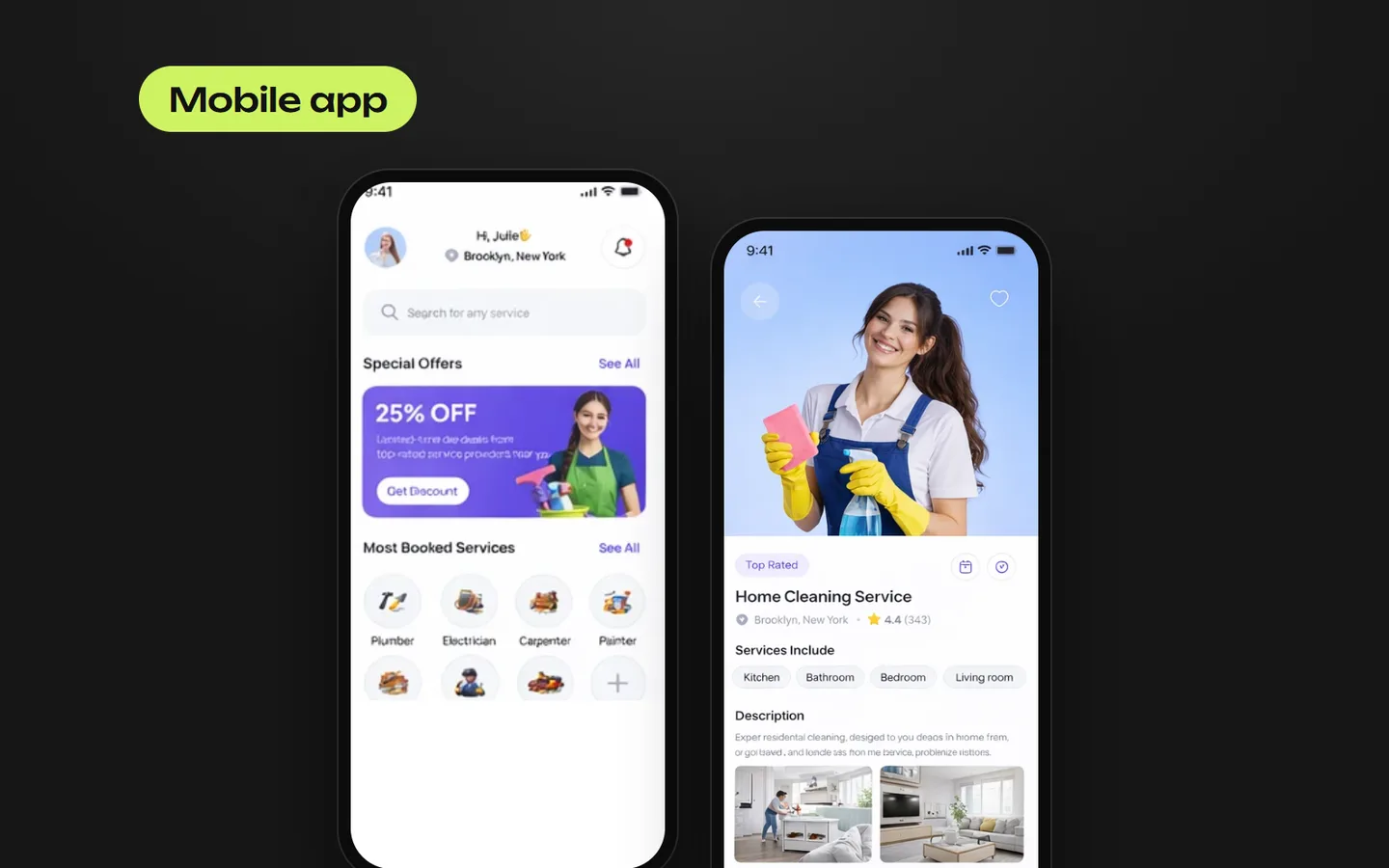
Service Marketplace App
A cross-platform marketplace app that connects service providers with clients and combines booking, chat, payments, CRM, and order management in one system.
Read moreWhat the price depends on
The calculator gives a rough price and timeline in a minute. I name the exact price after a short brief, before any work starts.
Calculate the price- Platform: a ready-made one with a subscription, or custom code
- Number of products and variants, and who enters them: you, a spreadsheet import or me
- Design: based on a ready theme or built from scratch
- Payment providers, shipping methods and the countries you sell to
- Integrations: CRM, inventory, accounting, email marketing
- Languages, currencies, customer accounts, discounts and loyalty rewards
How the work goes
-
Brief
You message me on Telegram and I ask a few questions about the task. I reply within 1-24 hours.
-
Estimate
I name the price, the timeline and what is included. I start only after we agree on it.
-
Development
You see working versions along the way, so changes happen early and not at the very end.
-
Launch
I launch the project, check it on real data and stay in touch after the release.
Ready-made platform or custom-coded store
| Ready-made platform (Shopify, WooCommerce) | Custom-coded store | |
|---|---|---|
| Launch | Faster: theme, cart and checkout already exist | Slower: design, frontend and backend are built for you |
| Monthly costs | A subscription (Shopify) or hosting (WooCommerce), plus paid themes and apps | A server and maintenance, no platform subscription |
| Custom logic | Within what the platform and its apps allow | Anything: wholesale and retail pricing, your own discounts, warehouse sync |
| Who edits the catalog | You, in the platform’s familiar admin | You, in an admin panel built around your products |
| Payments | The platform’s built-in and third-party gateways | Any payment provider with an API, for example Stripe |
| When to choose it | A standard store where launch speed matters | An unusual process, customer accounts, many integrations |
Tech stack
- Claude Code
- React
- Next.js
- TypeScript
- Python
- FastAPI
- PostgreSQL
- Stripe
- Telegram Mini App
- Telegram Payments
- Google Sheets
- Meta Pixel + CAPI
- Docker
Frequently asked questions
How much does an ecommerce website cost?
It depends on the platform, the number of products, the design and the integrations. The calculator on the site gives a rough estimate, and I name the exact price after a short brief, before any work starts. Plan for running costs too: a platform subscription or a server, payment processing fees and paid apps.
How long does it take to build an ecommerce website?
A store on a ready-made platform with a standard catalog launches fastest. A custom-coded store with accounts and integrations takes longer, and I fix the timeline in the estimate. For reference, the Telegram Mini App for a sneakers store took me 2 weeks.
Which ecommerce platform should I choose?
Shopify suits a standard store, especially one selling to several countries. WooCommerce on WordPress gives more control with no subscription, but needs hosting and regular updates. Custom code makes sense when your process is unusual. A Telegram store works when your buyers already live in the messenger. I suggest one after talking about your products and customers.
What do you need from me to start?
A product list with prices and photos (a plain spreadsheet is fine), your payment, shipping and return terms, and access to your domain. If the products are not collected anywhere yet, I help design the catalog structure and a spreadsheet template to fill in.
Can you migrate products from my current store or a marketplace?
Usually yes: products are exported to a file and imported into the new store. Before the estimate I check what moves automatically and what needs manual fixes. I keep old page URLs or set up redirects so the store does not lose its search rankings.
Can I add products and change prices without a developer?
Yes, through the admin panel. Before handover I show you how to add products, change prices, process orders and export reports. If you need support or new features later, I stay in touch after launch.
Can I sell on a website and in Telegram at the same time?
Yes, it is a common setup: the website brings buyers from search, and a Telegram bot or Mini App handles repeat orders and broadcasts. Orders from both channels can land in one CRM, so you keep a single customer base.
What will your project cost
Tick what you need and the calculator shows the approximate price and timeline right away. The exact price goes into the contract after a short call.
The calculator opens with
E-Commerce
To sell products online
- An online store with a CRM
- Customer accounts
- Up to 250 products
- Payments and delivery
- Admin panel (custom CMS) as a gift