Medical e-learning platform development: courses, quizzes and 3D anatomy, what it takes
Published on:
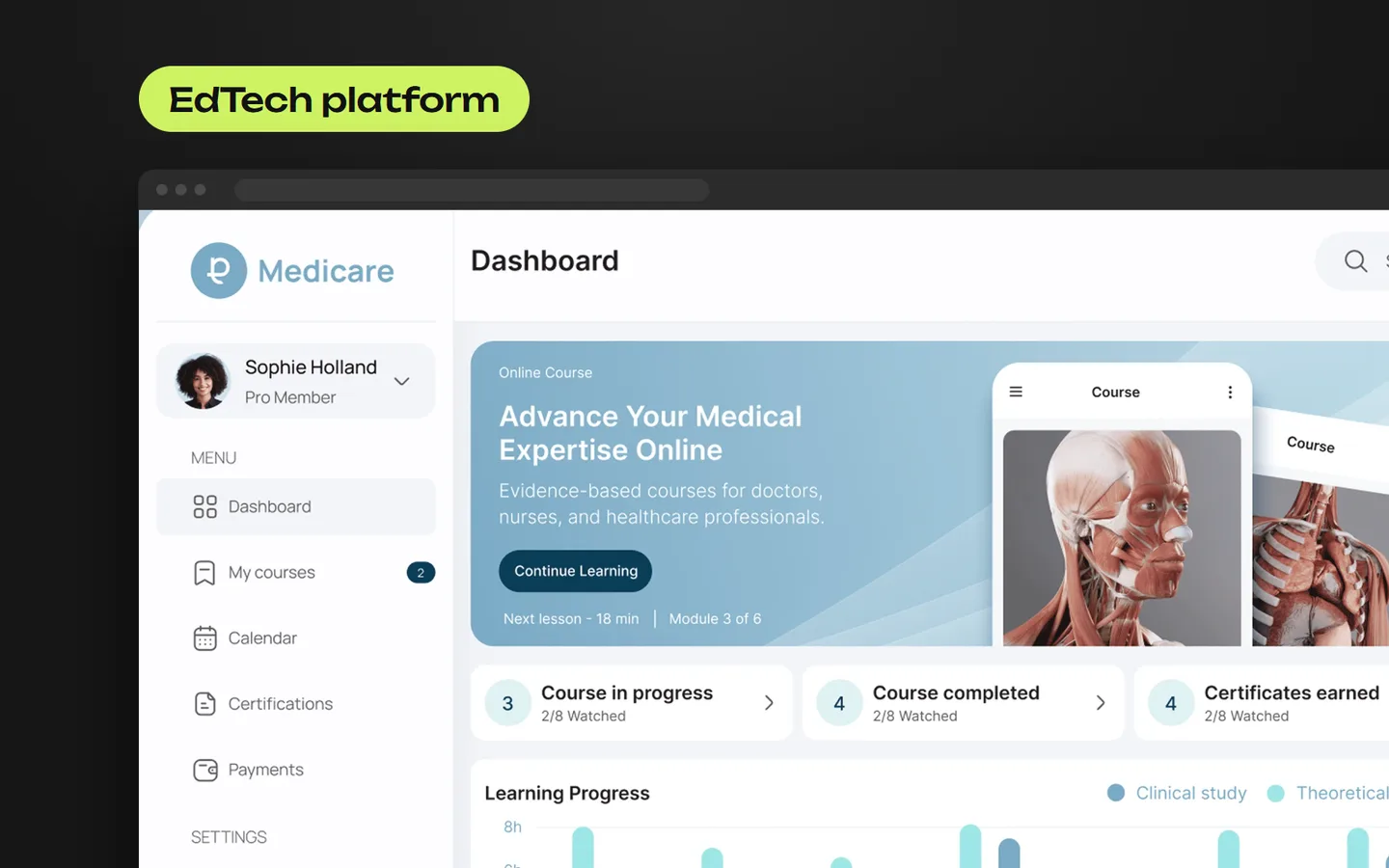
When someone asks for a “course website for medics”, it almost always turns out they need a working environment, not a showcase: heavy content, knowledge checks and different flows for different people. Below is a breakdown of my case, the medical e-learning platform, and a list of what to decide before development starts.
How it differs from a regular course website
A typical learning site is a landing page, payment and a list of videos. For medical education that is not enough. Here:
- the content is heavy: diagrams, illustrations, interactive models;
- knowledge has to be checked, not just shown;
- users split into roles: student, teacher, doctor;
- each role has its own path and its own set of actions.
That was the task in this project: build a digital environment, not a page with lessons.
What I built the platform from
The solution has four main parts:
- full stack platform development;
- frontend on React / Next.js;
- a system of courses, lessons, quizzes and flashcards;
- interactive 3D anatomy models.
The result is a scalable EdTech / MedTech platform that goes far beyond a standard course website.
Roles: where the project starts
The first question I ask: who does what in the system. A student takes a course and passes quizzes. A teacher assembles materials and sees how the group is doing. A doctor comes back to materials for review. If roles are not described up front, navigation and access rights have to be redone later.
What to write down before development
- which roles exist and what each one can access;
- who creates content and how it gets onto the platform;
- whether different groups need different material sets.
Courses, quizzes and flashcards: three different mechanics
It is easy to treat them as the same thing, but the jobs differ:
- Courses and lessons deliver material in order.
- Quizzes check what was learned.
- Flashcards help with review and memorising.
It works best when these parts are connected: after a lesson the person sees a quiz, and quiz mistakes lead to flashcards for review. Then the platform actually teaches instead of just storing files.
3D anatomy: why and what to consider
Interactive anatomy models give what a flat picture cannot: you can rotate, zoom and look at a structure from every side. But it is the heaviest part, and it needs planning early:
- how models load so the page does not lag;
- how to embed a model into a lesson instead of sending people to a separate section;
- what to do on a weak device.
That is why I do not leave 3D for the end of the project: page structure and technology choices depend on it.
Common mistakes in projects like this
- Building the platform as a set of pages instead of a system of roles and flows.
- Postponing quizzes and flashcards “for later”, though they are what makes learning learning.
- Not planning for growth: one course today, dozens tomorrow, and the structure has to hold.
- Underestimating the weight of heavy content.
What I need to scope the task
A few details are enough: who the platform is for, which roles are needed, what content already exists and whether you need interactivity like 3D. I calculate the cost for the specific task personally, after those answers.
If you need a similar platform or want to understand where to start, see the website and platform development service and message me in the bot: https://t.me/chornuy7_tech_bot?start=src_blog. We can sort everything out in chat, it is faster.
More Articles
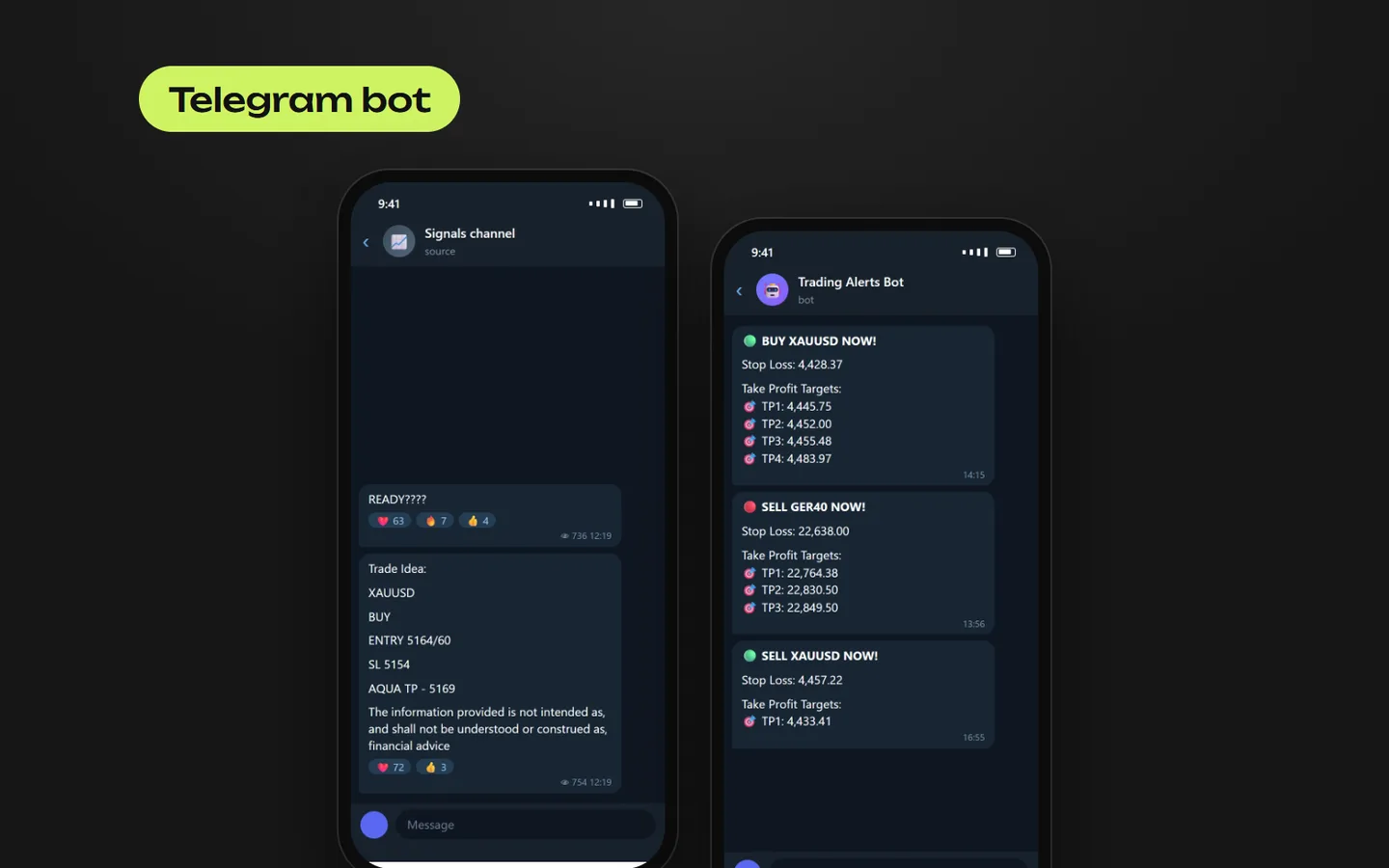
Forex Signal Bot for Telegram: Parse, Clean and Republish Without Manual Work
A breakdown of my case: a bot reads forex signals from a channel, cleans the text, calculates take-profit levels and publishes a uniform post. What to decide before starting.
Read more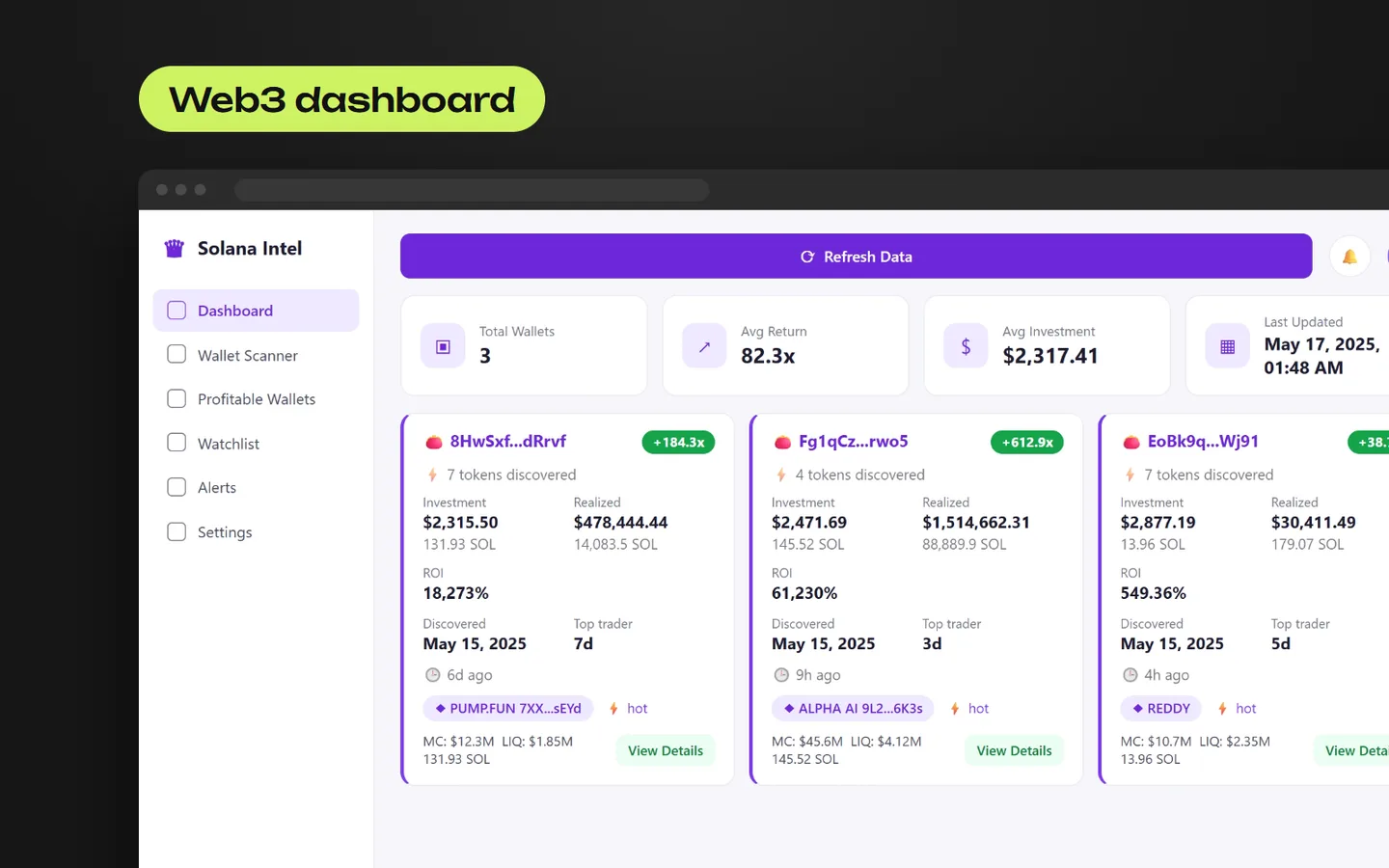
Solana wallet analytics dashboard: what to show so it gives insight, not just numbers
A breakdown of my Solana on-chain dashboard case: which blocks help you find strong wallets and understand their behavior, and what to settle before starting.
Read more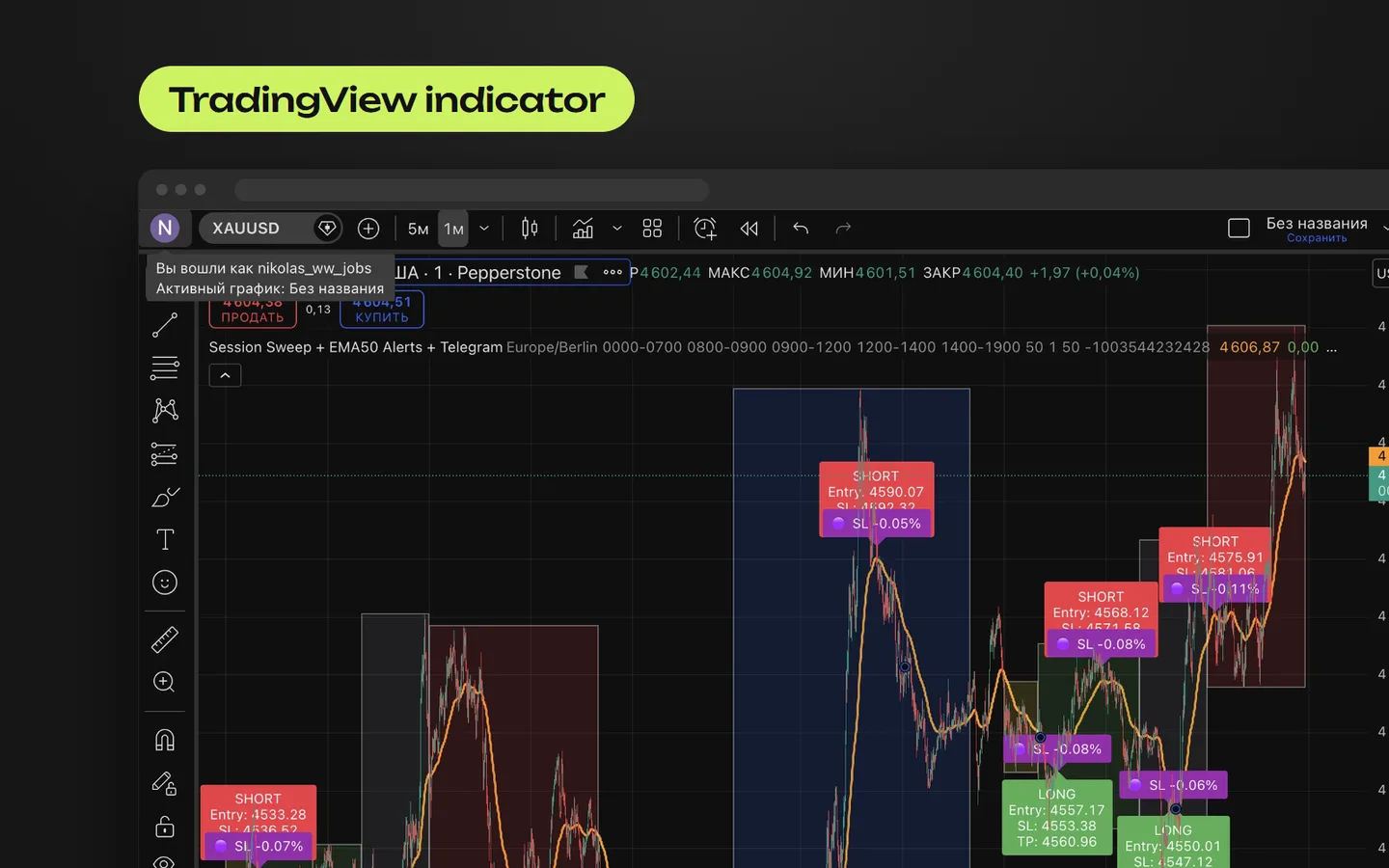
Custom TradingView Indicator in Pine Script: What to Define Before Development
A breakdown of my case: a TradingView gold indicator in Pine Script v6 with entry filters, dynamic SL/TP and alerts, plus what to define before development.
Read more